

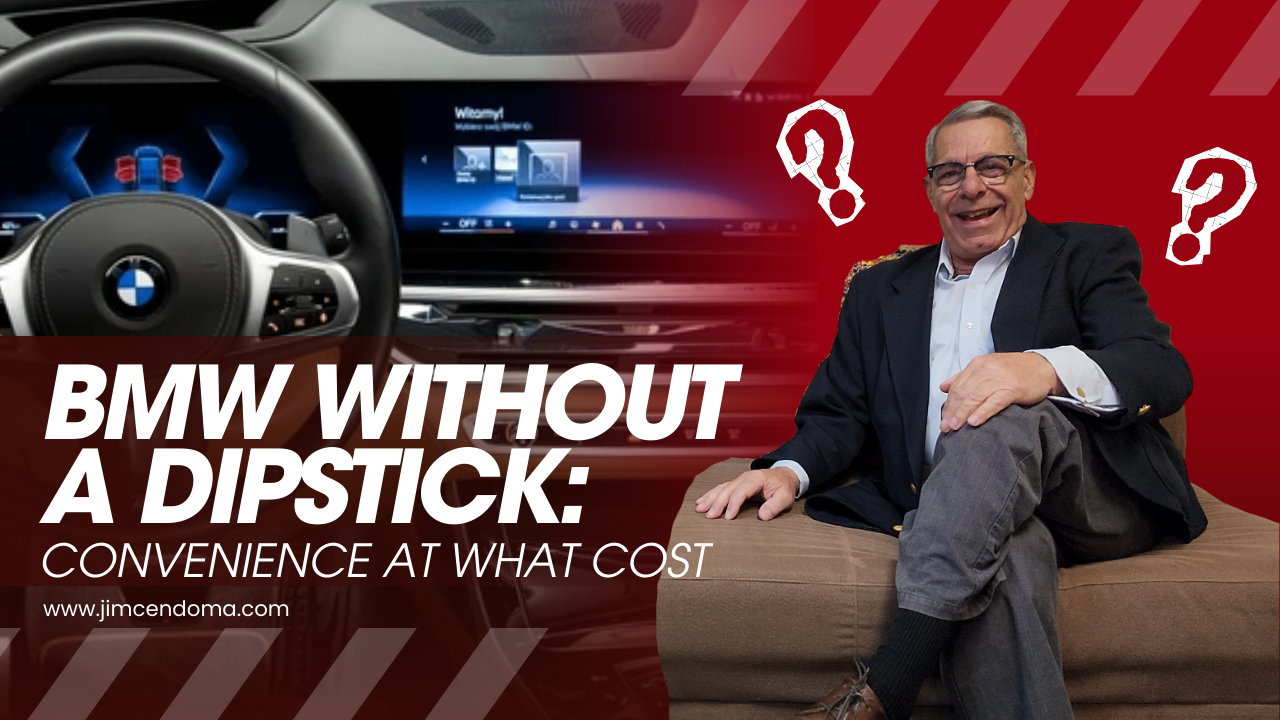
It’s 2026, and cars have evolved faster than most of us can keep up with. I recently encountered a BMW that had no dipstick. That’s right — no simple way to check the oil. On the surface, it feels sleek, convenient, and modern. But beneath that convenience lies a larger problem: modern technology is distancing people from understanding how things actually work.
In this post, I want to unpack what this “no dipstick” moment taught me about design, responsibility, and learning — not just in cars, but in business, engineering, and life.
Why Convenience Can Be Dangerous
Modern design often trades understanding for convenience. In cars, software monitors oil levels automatically, and dashboards simplify maintenance. Sounds great, right? Until it isn’t. When users are removed from the mechanics, they lose context — the ability to notice patterns, anticipate problems, or truly grasp the system.
This isn’t just about cars. I see the same patterns in business and tech. Automated dashboards, AI reports, and simplified processes often hide complexity. Teams may follow metrics without understanding the underlying system — and that’s when mistakes happen.
The Lesson From BMW
Standing next to that BMW, my first thought was practical: “How do I know the car is healthy if I can’t check it myself?” But then I realized the bigger lesson. Design is communicating responsibility. When a system removes the need for users to interact directly, it also removes opportunities to learn.
In my own work, I’ve seen how systems that hide complexity can lull teams into a false sense of security. They feel safe, but they’re missing the nuances that only come from hands-on experience.
Translating Automotive Lessons to Business
Think about your business like a high-performance vehicle. Every department, team member, or system is part of a larger machine. When we remove touchpoints, we reduce understanding. That’s why I always advocate for “learning by doing.” Even in tech-heavy roles, getting hands-on fosters intuition.
For example:
- Engineers who understand the basics of what the software is monitoring can troubleshoot more effectively.
- Sales teams who know the operational workflow can offer smarter solutions.
- Leaders who’ve seen the inner workings firsthand make better strategic decisions.
Why Systems Fail When Understanding Is Removed
There’s a subtle difference between a system failing and a system designed to fail. The BMW “no dipstick” approach is not inherently bad — the system still works. But it assumes perfect conditions, flawless sensors, and zero human error. When those assumptions break, the consequences are magnified.
In business, I’ve watched companies adopt tools or processes that remove human insight. The result? Teams react slower, problems snowball, and innovation slows down.
This is why I emphasize designing for failure, not perfection. Understand your system’s limits. Keep humans engaged. Keep learning alive.
Practical Advice From My POV
If you’re a designer, engineer, or business leader, here are my three takeaways from the BMW lesson:
- Maintain touchpoints. Whether it’s physically checking a system or reviewing workflows, don’t rely solely on automation.
- Teach the why, not just the how. Knowledge transfer is critical. Teams should understand the reasoning behind processes.
- Balance convenience with accountability. Easy-to-use systems are great — but ensure they still empower users to learn and take responsibility.
Why This Matters in 2026 and Beyond
As technology accelerates, we’ll encounter more “dipstick-free” situations. Cars, software, and workflows will become increasingly automated. But learning and understanding remain timeless. Leaders who cultivate hands-on knowledge and encourage their teams to do the same will thrive.
Conclusion
The BMW with no dipstick was more than a quirky design choice. It’s a reminder that convenience can mask complexity. It’s a call to stay curious, stay engaged, and keep learning.
If you want to see the full discussion where I unpack these lessons, check out the video here: https://www.youtube.com/watch?v=1BwY7FDqLF8&feature=youtu.be